Wyandotte chickens.
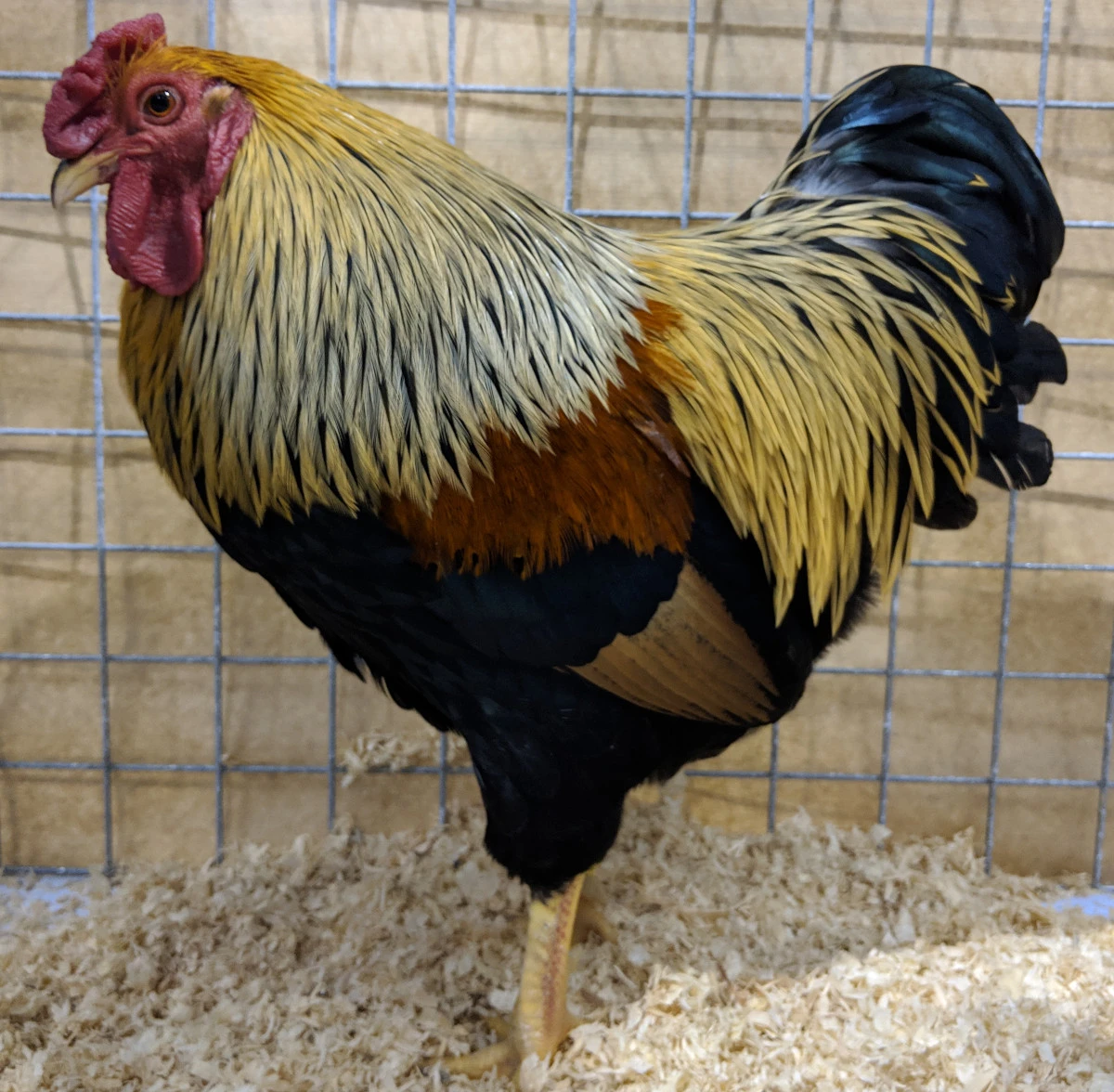
Wyandotte chickens are a heritage breed and have been part of the American farm culture since the 1800's. Hardy and active, these beautifully coloured fowls are dual purpose in that they make good meat and produce a steady supply of eggs.
Once almost fallen into conservation status, the world has rediscovered this unique and even-tempered breed.
Table of Contents
All images and video is of my own Wyandotte chickens.
Below: The Wyandotte is a compact and often beautifully coloured fowl with a variety of eye-catching coloration.
They are a relatively peaceful and docile breed given enough space to roam. They make a great addition to your backyard setup or farm and provide good quality eggs and meat.
Wyandottes make an excellent starter chicken if you are new to chicken keeping and also make a relatively fuss-free option for farms and backyard homesteaders.
Wyandotte chicken history:
The Wyandotte chicken originated in America around the 1870's, and some attribute its name to the indigenous Wyandot people of North Dakota. The first Wyandotte is attributed to four breeders:
- H. M. Doubleday
- John Ray
- L. Whittaker
- Fred Houdlette.
The precise genetic origin of this eye-catching breed remains a mystery. Experts suggest that the first breeders bred the Wyandotte from silver spangled Hamburgs and dark Brahmas. Before the American Standards of Perfection accepted the Wyandotte chicken into its lists in 1933, the breed went by 'American Sebright' or 'Sebright Cochin.'
Below: My silver laced Wyandotte bantams eating fresh sprouts.
The American Poultry Association recognises ten bantam varieties and nine large fowl varieties within the breed, while the American Bantam Association recognises 18 types. White and Silver Laced variations are the most popular in the large fowl variety, and the Whites, Blacks, and Partridge are the most popular bantams.
Wyandotte physical appearance:
The Wyandotte is an attractive bird, well-rounded and full-breasted, and broad across the back into the tail. Although they are of medium-sized length, they are compact and weigh around 5.5lbs to 8.5lbs (2.4kg-3.8kg.)
Wyandotte legs are clean legged with no feathers and yellow in colour, while the earlobes, wattle, and faces are typically red-coloured.
The Wyandottes have a rose comb that lies close to the head, making them a hardier choice for colder climes like the Upper Midwest.
Below: A Wyandotte head and rose-comb in close up detail.
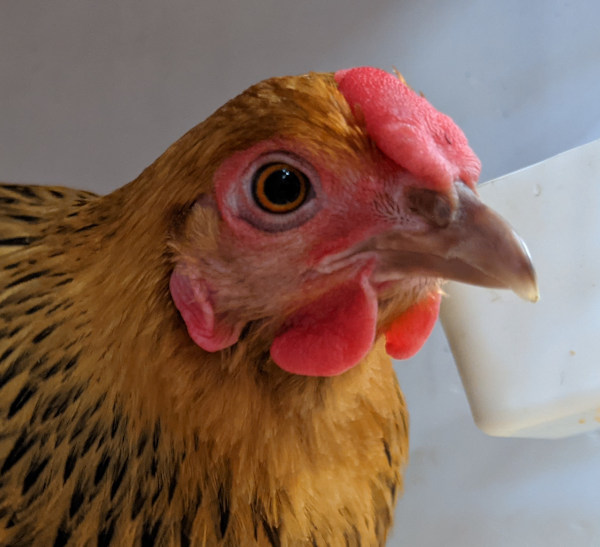
Chickens with larger single combs and wattles tend to be prone to frostbite in the winter months.
This is a "breed of curves" and should ideally conform to a circle shape when viewed from the side. The well-rounded chest and under-body should fit neatly into a circle with an under-body that curves up to the head and tail.
The back should be convex and slope towards the tail tip at a 40-degree angle for males and 30 degrees for hens.
Wyandotte chickens come in a variety of colours but not all are recognised in the standards:
- Black with an all-black plumage.
- White. Completely white feathers all over with no yellowing.
- Blue with a blue-gray colouring that darkens towards the head.
- Blue laced where the black lacing is replaced with blue.
- Buff colour with ginger orange plumage.
- Buff laced where the black lacing has been replaced with buff.
- Colombian Wyandottes are primarily white with black wingtips, neck feathers, and tails,
- Golden laced Wyandottes are mainly golden brown with black feather tips and tails.
- Partridge Wyandottes are primarily buff with feathers pencilled with three angled stripes towards the edges.
- Silver laced Wyandottes are one of the most eye-catching with white feathers with black edges and black tails.
- Silver penciled Wyandottes are similar to the Partridge patterning but have silver/white plumage instead of buff.
The APA also includes the colour variation of Buff Colombian in its bantam category.
Wyandotte personality:
Wyandottes are known for their calm demeanour and low-stress reactions compared to other higher maintenance breeds. While Wyandottes are docile and friendly, they are not as cuddle-friendly as other breeds, such as the Buff Orpington. They thrive in free-range and forage setups but tolerate confinement to some degree.
Below: A buff laced Wyandotte hen.
Popular opinions on the chattiness of the Wyandotte chicken are contradictory, with some experts rating them below medium and some above. A likely explanation for this division is that the Wyandotte tends to be noisier in confinement than when left to roam freely.
Wyandotte chickens as egg layers:
Although they are considered dual-purpose fowl, the Wyandotte hen is a capable layer and lays around 200 eggs a year.
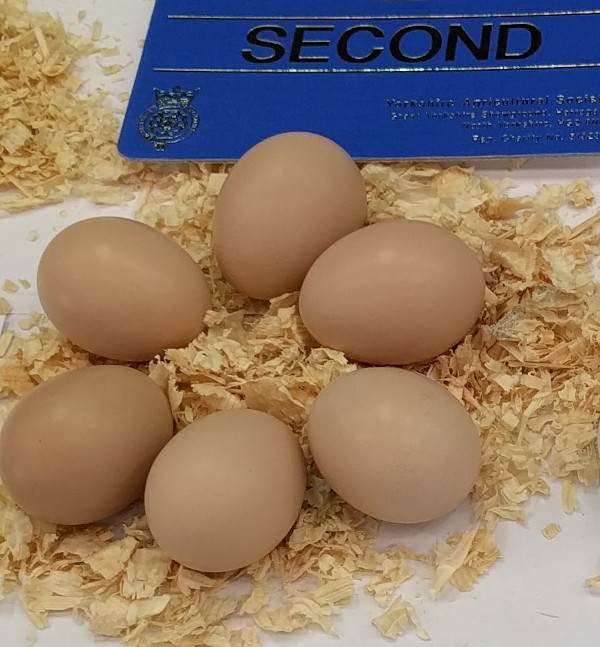
Some strains are better layers than others, and the shade of eggshell can vary from almost white to deep brown.
Below: My Wyandotte eggs getting second place in a show.
Wyandottes are consistent layers and will lay most of the year but in very dark conditions you may need to provide supplemental light in their coop.
When adequately cared for, the typical Wyandotte lays 4 to 5 large brown eggs per week, although they start laying later than some other egg-laying breeds.
Due to the plump size of the Wyandotte chicken, they will only begin to lay eggs at around 6 to 8 months old.
Are Wyandottes broody:
Wyandottes tend to be broody, which you should consider if you wish to use your chicken eggs for food and not fertilisation.
That being said, overly broody Wyandotte hens brooding on unfertilised eggs is not a very common occurrence. It is always a good idea to inquire from your chosen hatchery broodiness level of their particular strain.
They are also excellent sitters and mothers to their brood.
The pros and cons of Wyandotte chickens:
Wyandottes are a peaceful and friendly breed that lay consistently and can be used for meat. As they are a heritage breed, they take longer to reach full maturity in terms of ideal culling time. They are a hardy breed that can tolerate colder temperatures and are not prone to illness and diseases.
Wyandottes need a more extensive run to thrive, and although they tolerate confinement, they are not the best suited for small coop setups. They are poor flyers, so they are vulnerable to predation, which owners should consider when choosing the breed.
Wyandottes may be pretty shy and avoid physical contact with humans as backyard pets. Owners can remedy this shyness by handling their chicks gently and often as they grow up. A treat every so often also warms them up to their human companions.
Being an assertive breed, Wyandotte roosters may be prone to aggression if they don't have a respectful relationship with their human companions. Once again, handling your young Wyandotte when young may eliminate potential aggressive displays against humans.
Wyandottes are not the most heat tolerant of the chicken breeds and need proper ventilation, shade, and access to fresh water in the summer months. Their dense plumage and relatively large size make them more susceptible to heat,
Wyandottes are a curious and active breed and are potentially destructive to your backyard garden if left to their own devices. While foraging for food, Wyandottes tend to scratch up grass and vegetation like many other chicken breeds.
Buy my Wyandotte hatching eggs, chicks and birds:
I breed several types of Wyandottes here in Yorkshire and ship hatching eggs to mainland UK. I only supply hatching eggs in season from March to August.
Chicks and birds are available as and when by pre-order only for collection from Haworth in West Yorkshire. I only hatch in season and birds are only available in summer.
Below: A recent hatch of Wyandotte chicks.
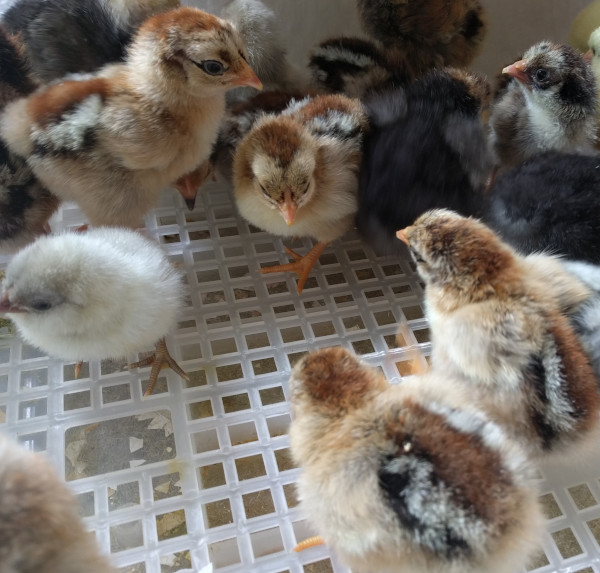
Hatching eggs are £1 each, day old chicks cost £3 each and POL Wyandottes are £35 each.
Contact and find me:
You can contact me on harry@wyandotte.co.uk. We are based in Haworth, west yorkshire.
Wyandotte chicken FAQ's:
Are Wyandotte Chickens Friendly?
Wyandottes are active and friendly fowl, except for roosters with little human handling and interaction.
Are Wyandottes better in the heat or cold?
Wyandottes are large chickens that have heavy feathering and are unsuitable for very warm environments. They also have small combs meaning they struggle to lose heat easily.
Wyandottes are much more suited to colder areas.
Below: Wyandottes are inquisitive and friendly.
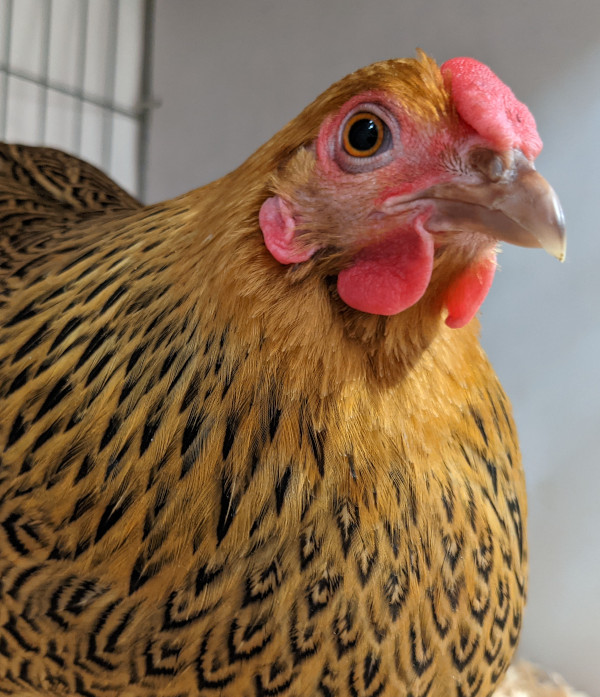
Wyandottes who are petted and fed treats tend to be more affectionate to their human companions. Once used to human contact, Wyandottes often express affection for their owners, recognise their voices, and often greet them when they come into the yard.
How Many Years do Wyandottes Lay Eggs?
The average Wyandotte hen will lay eggs consistently at the rate of around 200 eggs per year. After three years old, the Wyandotte will continue to lay but less frequently than the years leading up to the 3-year mark.
How Long do Wyandottes Live?
A well-cared-for Wyandotte can last anywhere from 6 to twelve years. They are a hardy breed and are not naturally prone to genetic ailments and disease. Your chickens' diet also influences the longevity of your flock.
Conclusion:
The curious and chatty Wyandotte chicken is a colourful and active backyard companion with lots to do and lots to say.
They can be taught to show affection and are a hardy and bold breed of fowl that are consistent egg layers with a happy disposition. However, they thrive with room to roam, and owners should allow them to follow their naturally busy natures.